Spherical
A compact cell enclosed by a defined wall, often dominated by a large central vacuole.
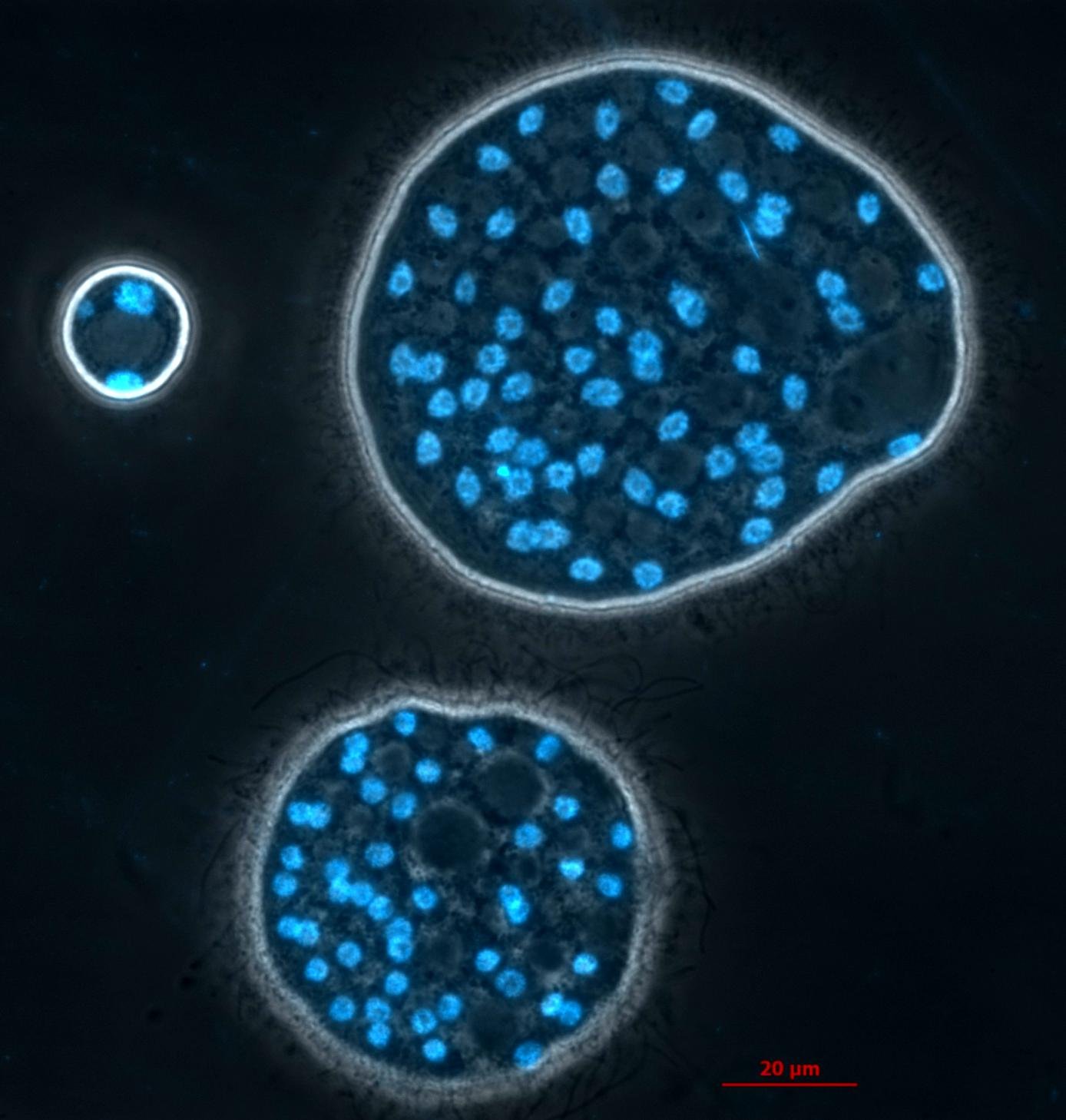
ICHTHYOSPOREA / MAIN EXPERIMENTAL SYSTEM
One genome.
Many cellular identities.
Fluorescence microscopy · Multicellgenome Lab
PHENOTYPIC PLASTICITY
Abeoforma whisleri moves through a striking repertoire of morphologies. Its non-linear life cycle offers a rare experimental system to ask how one genome generates distinct cellular identities—and how cells transition between them.
A LIFE CYCLE IN MOTION
Cells grow, remodel and transition between states. The path is dynamic—and may change with context.
CELLULAR IDENTITIES
A compact cell enclosed by a defined wall, often dominated by a large central vacuole.
The cell reshapes, extends and reorganizes its contents without following a simple linear sequence.
Nuclear divisions produce a multinucleate cell before cellularization releases a new generation.
Distinct motile forms may connect morphology to a specialized function and environmental response.
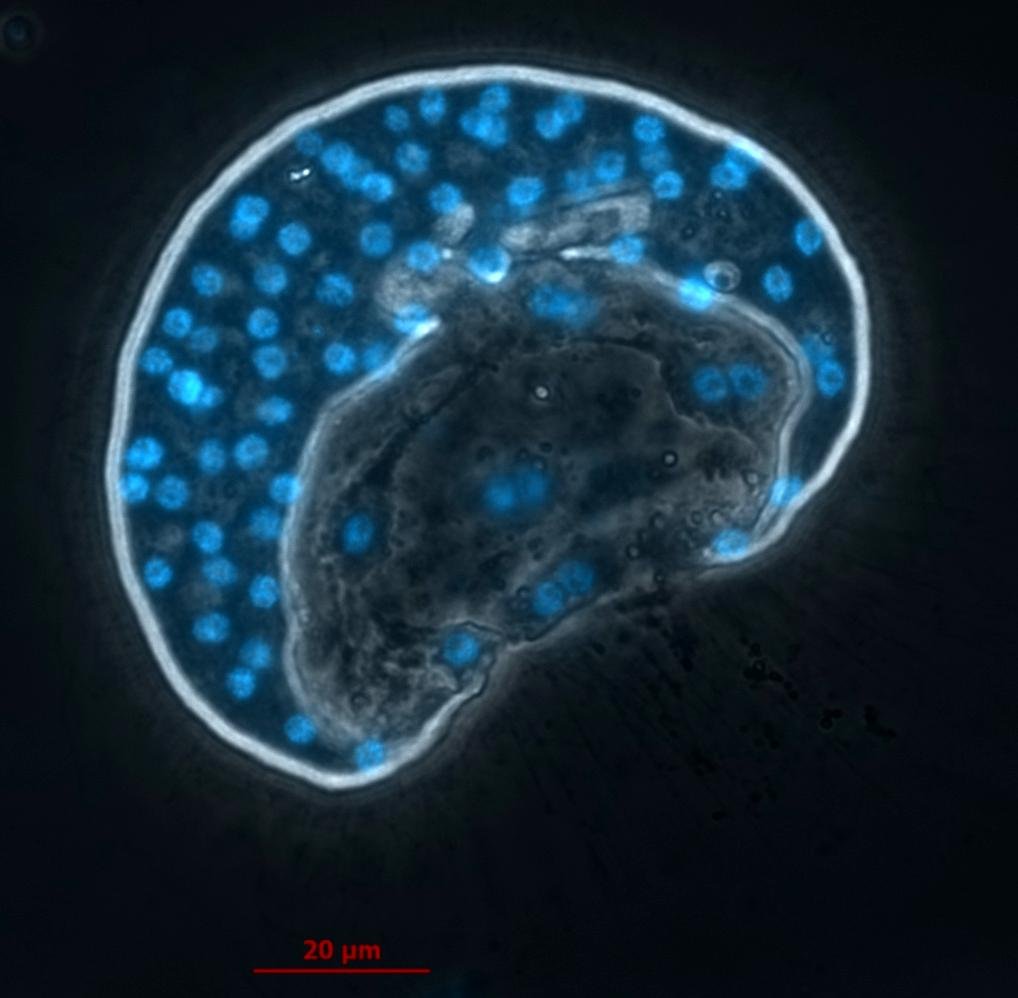
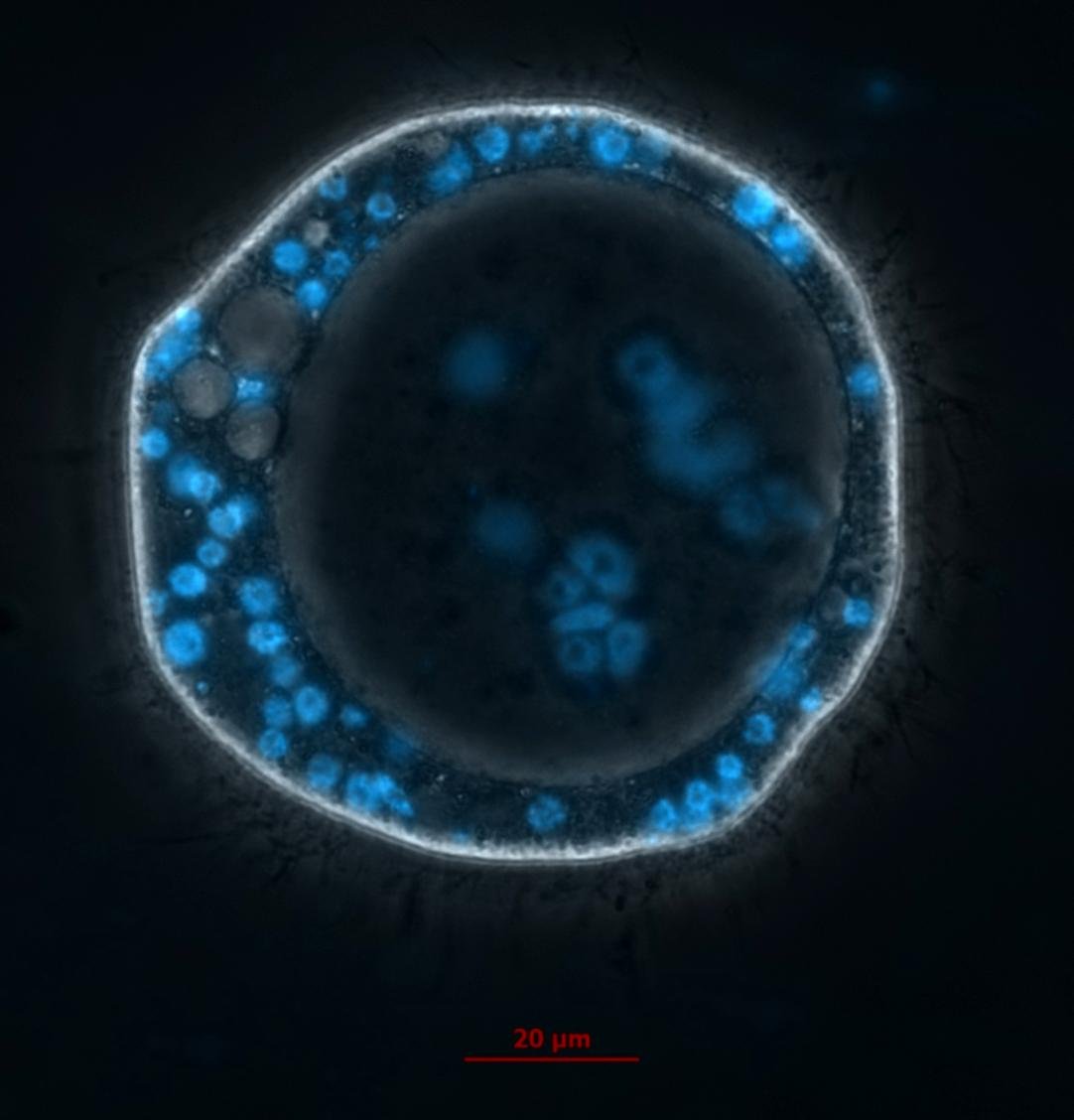
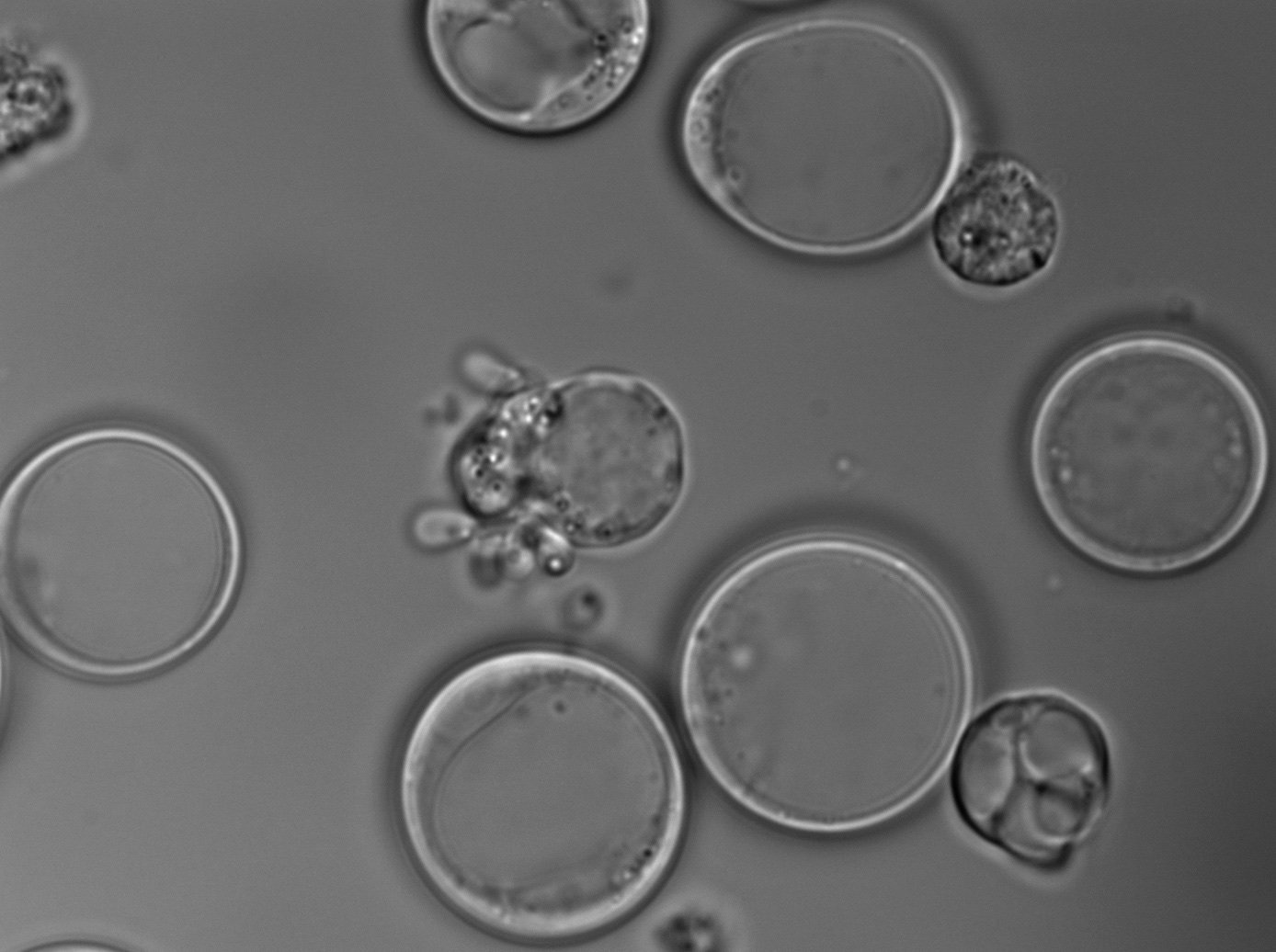
WHY IT MATTERS
Animals build bodies by generating specialized cell types from the same genome. Abeoforma lets us investigate a possible evolutionary foundation of that capacity: regulated transitions between phenotypically distinct states in a unicellular relative of animals.
DECODING CELL-STATE TRANSITIONS
Define the cellular states and the structures that distinguish them.
Reconstruct how cells move between states across a non-linear life cycle.
Test how external conditions influence the appearance of particular phenotypes.
Connect each cellular identity to its underlying transcriptional and regulatory programme.
AN EMERGING MODEL
First isolated from an invertebrate digestive tract, Abeoforma now combines cultivation, a reference genome, live imaging and transient transfection.
FOUNDATIONAL WORK
Marshall and Berbee isolated and formally described a living culture from an invertebrate digestive tract, revealing an undescribed ichthyosporean clade.
↗2015Broad phylogenomics placed Abeoforma within Ichthyosporea and clarified the deep relationships among the closest relatives of animals.
↗2017The Abeoforma genome joined a comparative platform for reconstructing molecular innovation before animal multicellularity.
↗2020A community-wide Nature Methods effort established transient transformation and fluorescent expression in Abeoforma.
↗GENOME & RESOURCES
CONTINUE EXPLORING