Growth
A newborn cell grows without immediately dividing.
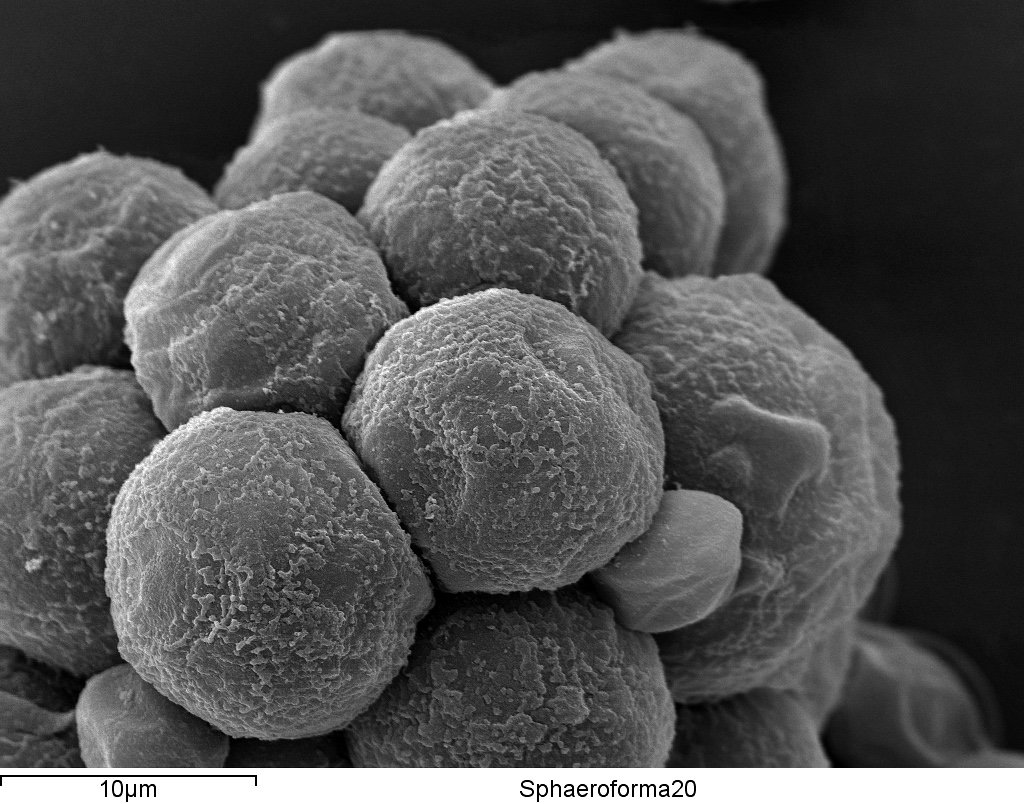
ICHTHYOSPOREA / MAIN EXPERIMENTAL SYSTEM
One cell. Many nuclei.
A coordinated programme of cellularisation.
Scanning electron microscopy · Multicellgenome Lab
A DEVELOPMENTAL PARADOX
Sphaeroforma arctica grows as a coenocyte: it repeatedly duplicates its nuclei while keeping them inside a shared cytoplasm. Then, with remarkable precision, it builds a new cell around each nucleus.
THE TRANSITION
THE DEVELOPMENTAL PROGRAMME
A newborn cell grows without immediately dividing.
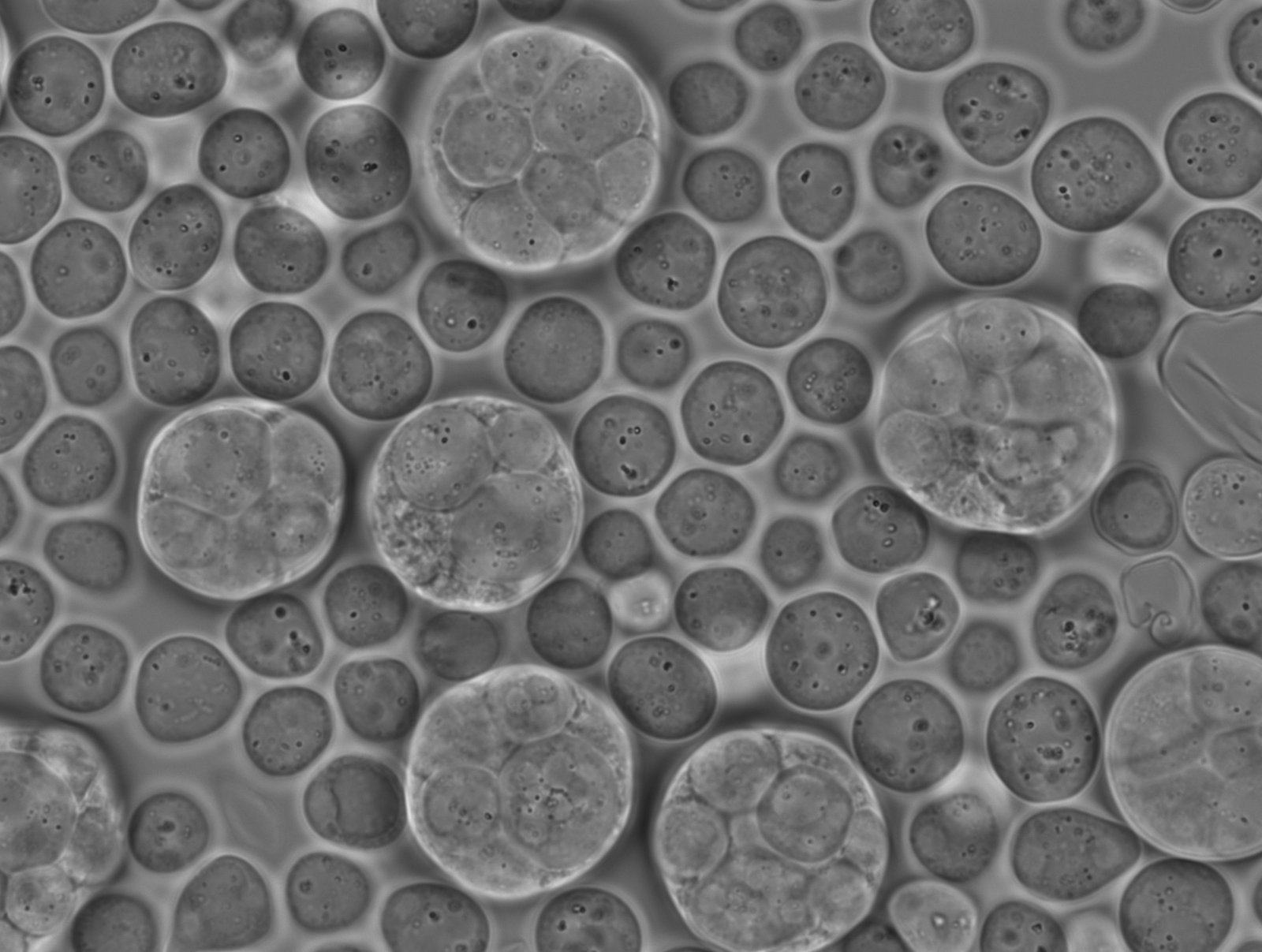
Regular rounds of nuclear division create a coenocyte: many nuclei sharing one cytoplasm.
An actomyosin network guides coordinated membrane invaginations around the nuclei.
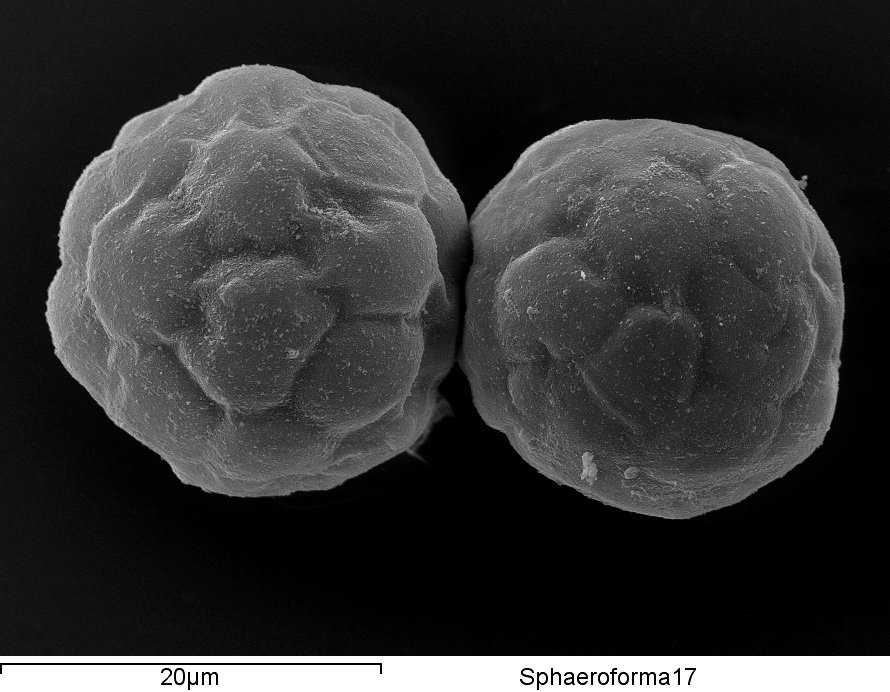
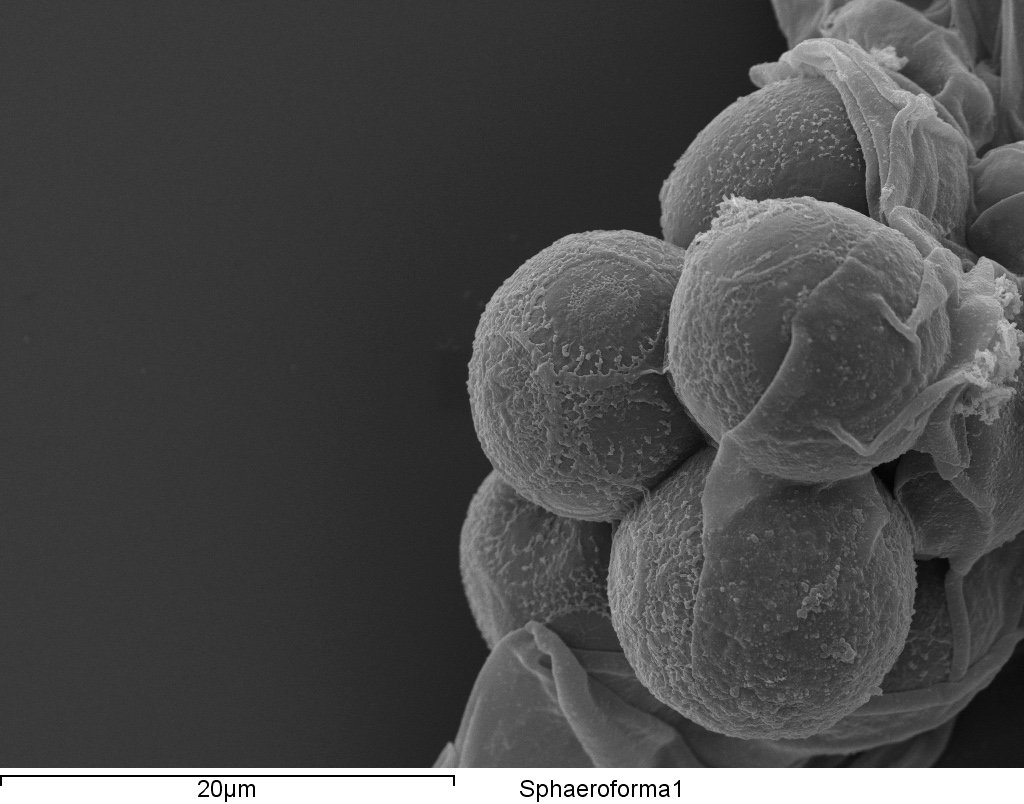
A transient layer of polarized cells reorganizes and releases a new generation.
WHY IT MATTERS
Sphaeroforma does not make an animal embryo. But its coordinated membrane invagination, actomyosin dynamics, cell polarity and control of developmental timing reveal that important ingredients of animal development existed before animals.
DECODING CELLULARISATION
Nuclear divisions follow a regular rhythm before cellularisation begins.
The balance between nuclear content and cell volume helps determine when cellularisation starts.
A spatially organized actomyosin network drives inward membrane growth.
New cells briefly form a polarized, epithelium-like layer before release.
FOUNDATIONAL WORK
A phylogenomic framework resolved the major opisthokont lineages and established ichthyosporeans as key organisms for reconstructing animal origins.
↗2017Comparative genomes, including Sphaeroforma, reconstructed the changing molecular toolkit along the animal stem lineage.
↗2019Imaging and transcriptomics revealed coordinated membrane invagination and a transient polarized cell layer.
↗2022Selection for faster sedimentation repeatedly produced clonal multicellular variants through incomplete separation of newborn cells.
↗GENOME & RESOURCES
CONTINUE EXPLORING